WHO transformation timeline
The Transformation Agenda is the most ambitious reform in WHO’s 76-year history. This timeline highlights some of the key milestones on this journey.
2019
WHO’s major offices are reorganized to fit the new three-level operating model. At WHO headquarters, a new executive level post of Chief Scientist is created, a historic first for WHO, and capacities in the areas of science, communication, resource mobilization, data and antimicrobial resistance is strengthened.

WHO / Christopher Black
2021
The WHO Executive Board establishes a Working Group on Sustainable Financing to carry forward a major objective of the Transformation Agenda. The WHO Foundation is established. An independent external evaluation and a performance audit of the Transformation Agenda provides important recommendations to adjust the ambitious work going forward.

WHO / Pierre Albouy
2020
Early in the transformation process, just as many initiatives are getting started, the COVID-19 pandemic hits. An overarching strategic focus on leveraging partnerships in the early years of the transformation effort allows for the rapid roll-out of vital initiatives such as the COVID-19 Solidarity Fund and the Access to COVID-19 Tools (ACT) Accelerator. Newly established capacities for communication and science are tested in the pandemic, to deliver at an unprecedented scale and intensity.

WHO / Christopher Black
2020
Despite the pandemic, many transformation initiatives are consolidated and institutionalized. By the end of 2020, 19 of the 40 initiatives had been rated as completed or fully implemented.

WHO / Mwesuwa Ramsey
2022
From a pre-pandemic volume of US$ 800 million/year, WHO’s procurement of good and services has doubled, making it the fifth largest procurer in the UN system. As part of transformation, a complete overhaul is undertaken to create a professional and integrated supply chain that delivers goods and services efficiently and sustainably. A dedicated Transport and Logistics Hub is taken forward as part of WHO’s new Business Management System (BMS).

WHO / Yoshi Shimizu
2024
In the context of a complex and rapidly changing world, the Fourteenth General Programme of Work (GPW 14) is drafted, taking into account the key improvements made in GPW 13 and reinvigorating the Transformation Agenda. WHO takes stock of the progress made in the transformation process and reprioritizes to align with GPW 14, embedding change management, intensified efforts to build a motivated and fit-for-purpose workforce and a strengthened focus on country impact. To improve collaboration between the three levels of the organization, WHO rolls out a OneWHO intranet platform.
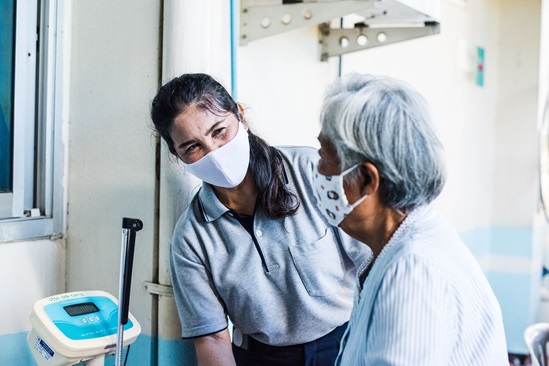
WHO / Ploy Phutpheng
2024
WHO launched its first Investment Round at the World Health Assembly in May 2024, underpinned by the Investment Case 2025–2028, All for Health, Health for All, to mobilize funding for the Fourteenth General Programme of Work (GPW14).
This marked a new approach to financing WHO’s work, shifting towards more predictable, flexible, and resilient funding.

2025
Amid a challenging global context, reductions in overseas development assistance for health led to a more constrained financing environment for both WHO and the countries it serves, prompting the Organization to undertake a prioritization and alignment exercise in 2025.
In parallel, WHO, the World Bank and the Government of Japan launched the Health Works Leaders Coalition in October 2025, bringing together leaders to promote investment in health and support countries in mobilizing domestic resources to strengthen resilience in this context, illustrating a more collaborative approach to engaging partners in support of country-led health financing in a changing environment.

WHO / Antoine Tardy
2018
WHO’s Thirteenth General Programme of Work (GPW 13) is approved by the Executive Board in January 2018, catalysing a paradigm shift for WHO towards a data-driven and results-focused Organization delivering country impact. Anchored in the Global Policy Group, the Transformation Plan & Architecture is developed in parallel, aligning GPW 13 and the Transformation Agenda. “The overriding goal of the Transformation Agenda is a modern WHO working seamlessly to make a measurable difference in people’s health at country level,” said WHO Director-General Dr Tedros Adhanom Ghebreyesus.

2017
Dr Tedros Adhanom Ghebreyesus takes office in July 2017. The Transformation Agenda is launched, inspired and informed by experiences from the Transformation Agenda of the WHO African Region, initiated in 2015.
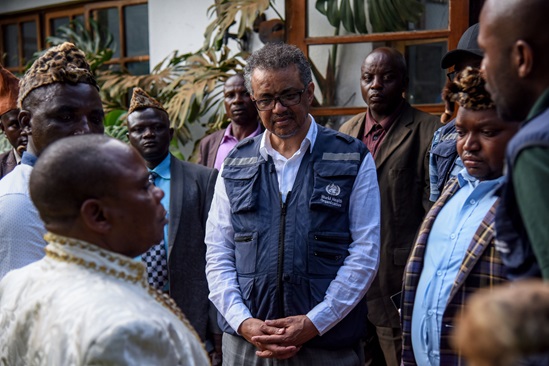
2022
Launched in 2018 as part of the Transformation Agenda of the WHO African Region, the “Pathway to Leadership” programme is expanded to provide leadership training across several other WHO regions, including cohorts specifically for women trainees.
WHO/L. Cipriani
2022
Efforts to strengthen work on multilateral affairs intensify. WHO’s presence at key high-level meetings such as the G7 and G20 forums and the United Nations Framework Convention on Climate Change (UNFCCC) Conference of Parties (COP) is an indication of a shift from working on the sidelines to becoming key players in moving forward the global conversation around health. Internally, WHO’s work to update the Internship Programme to ensure greater equity of access, as mandated by Member States, comes to fruition and the new Programme is launched in October 2022.

G20 India
2025
At the Seventy-eighth World Health Assembly in May 2025, WHO Member States adopted the world’s first Pandemic Agreement and approved a second increase in assessed contributions to strengthen WHO’s 2026–2027 budget.
Together, these decisions marked a historic step in reinforcing global health cooperation, establishing a new framework to better prevent and respond to pandemics, while securing more predictable and sustainable financing for WHO’s work.

WHO / Lindsay Mackenzie
2023
Marking a radical new approach to partnerships, the WHO Youth Council and the WHO Civil Society Commission are launched and WHO fosters partnerships with organizations such as Google and FIFA.
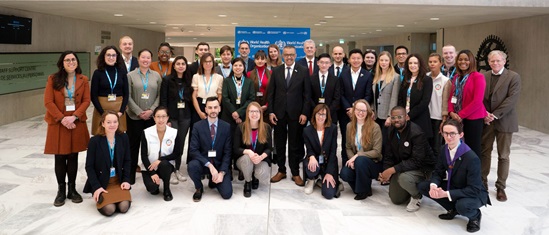
WHO / Christopher Black
2026
In April 2026, WHO convened the first-ever Global Forum of Collaborating Centres in Lyon, bringing together representatives from more than 800 institutions across over 80 countries, one of the world’s largest scientific and public health networks supporting WHO’s work.
The Forum strengthened collaboration across this network and renewed its focus on putting science into action, reflecting WHO’s evolving approach to working with and leveraging partners to better support countries and address global health challenges.

WHO / Laurent Cipriani
2022
The World Health Assembly adopts the principles of sustainable financing. Member States lead reform initiatives through the Agile Member State Task Group and the Secretariat Implementation Plan, in support of the Transformation Agenda. In December 2022 the 11th Global Management Meeting (GMM) launches the Action for Results Group as an accelerator for the transformation effort to focus on strengthening WHO’s country presence.

WHO / Christopher Black
2026
At the Seventy‑ninth World Health Assembly in May 2026, Member States agreed to establish a Member State‑led, WHO‑hosted joint process on Global Health Architecture reform. The process recognizes WHO’s role in bringing together global health actors and the need for more coordinated, partner‑driven approaches across the global health system. It could have important implications for WHO’s ongoing organizational change efforts, including efforts to sharpen its focus on its core mandate and areas of greatest comparative advantage.

WHO / Antoine Tardy
2021
In 2021, after distressing accounts of sexual exploitation and abuse in the Democratic Republic of the Congo during the recent Ebola outbreak, WHO launches an intense period of internal and external review, committing to concrete actions for strengthening the prevention of and response to sexual misconduct. This sobering period led to greater accountability and transparency in all areas of work. Improvement of capacities for measuring, evaluating, assessing WHO’s work and reporting back to Member States, allowed for learning and scaling up key elements of the transformation.
Preventing and Responding to Sexual Exploitation, Abuse and Harassment

WHO
2017
Extensive staff engagement takes place through a ‘Working Group on Initiatives for Change’, dedicated task forces to develop initiatives, and an ‘open door’ process of deep listening by the Director-General and other senior leaders, inviting staff to share their ideas, innovation and expertise in one-on-one meetings. Through an organization-wide ‘Values Jam’, a new WHO Values Charter was presented in 2018.
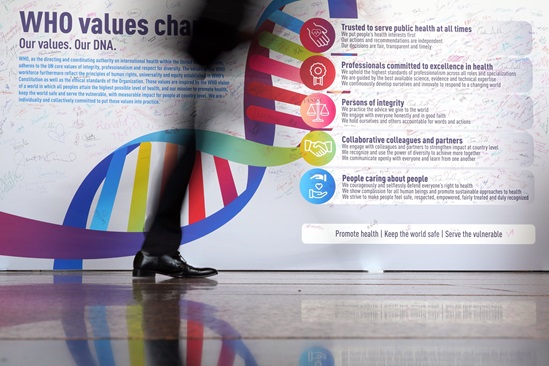
WHO / Laurent Cipriani
2019
The Transformation journey is kicked off by the WHO Director-General and the six WHO regional directors in a joint speech on ‘transforming for impact’. The first major step is a radical new three-level operating model, aligning the structures of WHO’s major offices. The ambitious and comprehensive Transformation Agenda is laid out with three strategic objectives, to be delivered through seven workstreams with a total of 40 separate initiatives.

2021
WHO's Global Service Centre (GSC) in Kuala Lumpur continues to expand, with now more than 300 colleagues supporting global administrative functions across the Organization. The GSC is reorganized with five functional teams with direct reporting lines to relevant departments at headquarters, ensuring end-to-end ownership and accountability of the human resources, finance, procurement, travel and payroll processes.
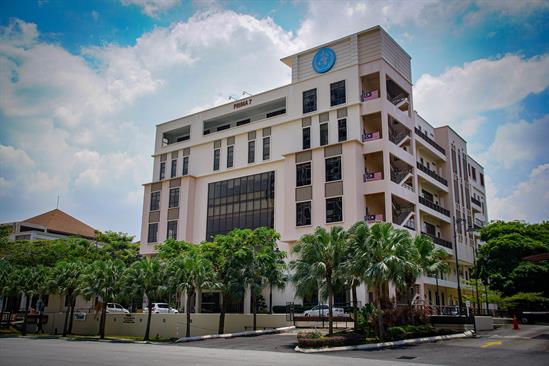
WHO/GSC
2025
WHO is advancing its work on traditional, complementary and integrative medicine through the Global Traditional Medicine Centre, established in 2022 to strengthen research, data and collaboration. This agenda was further reinforced by the adoption of the Global Traditional Medicine Strategy 2025–2034 at the Seventy‑eighth World Health Assembly in May 2025, which sets a framework to strengthen evidence, ensure safety and regulation, and integrate traditional medicine into health systems as part of a more people‑centred approach to health.

© WHO / Ernest Ankomah
2024
WHO launched the WHO Academy in Lyon, France in December 2024 as a global learning centre to strengthen the health and care workforce.
Designed to deliver online, blended and in-person learning, the Academy provides access to high-quality, learner-centred training aligned with WHO priorities.
